Elf
ELVES
Elves mingle freely in human lands, always welcome yet never at home there. They are well known for their poetry, dance, song, lore, and magical arts. Elves favor things of natural and simple beauty. When danger threatens their woodland homes, however, elves reveal a more martial side, demonstrating skill with sword, bow, and battle strategy.
Personality: Elves are more often amused than excited, and more likely to be curious than greedy. With such a long life span, they tend to keep a broad perspective on events, remaining aloof and unfazed by petty happenstance. When pursuing a goal, however, whether an adventurous mission or learning a new skill or art, they can be focused and relentless. They are slow to make friends and enemies, and even slower to forget them. They reply to petty insults with disdain and to serious insults with vengeance.
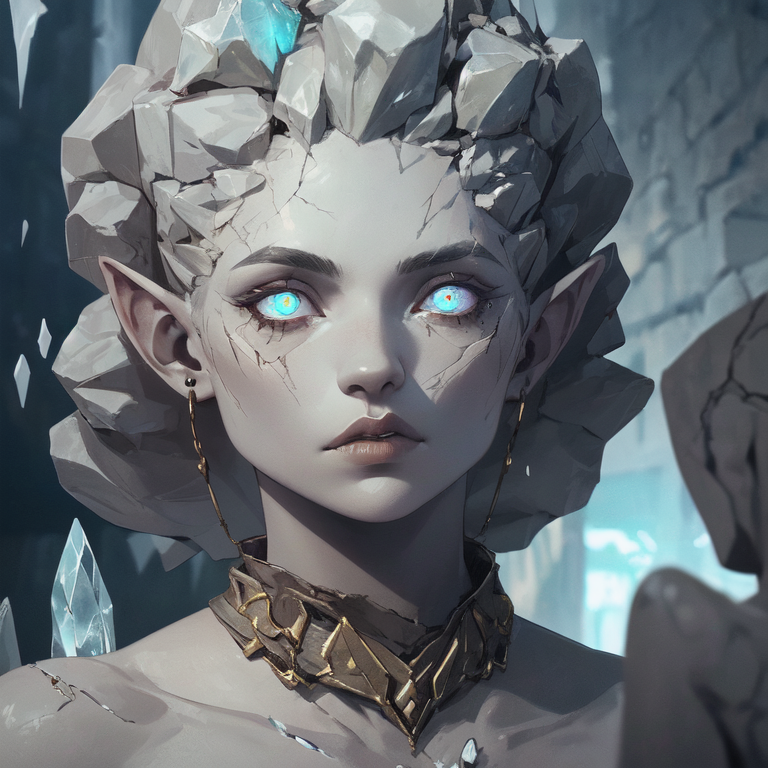
Physical Description: Elves are short and slim, standing about 4-1/2 to 5-1/2 feet tall and typically weighing 95 to 135 pounds, with elf men the same height as and only marginally heavier than elf women. They are graceful but frail. They tend to be pale-skinned and dark-haired, with deep green eyes. Elves have no facial or body hair. They prefer simple, comfortable clothes, especially in pastel blues and greens, and they enjoy simple yet elegant jewelry. Elves possess unearthly grace and fine features. Many humans and members of other races find them hauntingly beautiful. An elf reaches adulthood at about 110 years of age and can live to be more than 700 years old.
Elves do not sleep, as members of the other common races do. Instead, an elf meditates in a deep trance for 4 hours a day. An elf resting in this fashion gains the same benefit that a human does from 8 hours of sleep. While meditating, an elf dreams, though these dreams are actually mental exercises that have become reflexive through years of practice. The Common word for an elf’s meditation is “trance,” as in “four hours of trance.”
Relations: Elves consider humans rather unrefined, halflings a bit staid, gnomes somewhat trivial, and dwarves not at all fun. They look on half-elves with some degree of pity, and they regard half-orcs with unrelenting suspicion. While haughty, elves are not particular the way halflings and dwarves can be, and they are generally pleasant and gracious even to those who fall short of elven standards (a category that encompasses just about everybody who’s not an elf).
Alignment: Since elves love freedom, variety, and self-expression. They lean strongly toward the gentler aspects of chaos. Generally, they value and protect others’ freedom as well as their own, and they are more often good than not.
Elven Lands: Most elves live in woodland clans numbering less than two hundred souls. Their well-hidden villages blend into the trees, doing little harm to the forest. They hunt game, gather food, and grow vegetables, and their skill and magic allowing them to support themselves amply without the need for clearing and plowing land. Their contact with outsiders is usually limited, though some few elves make a good living trading finely worked elven clothes and crafts for the metals that elves have no interest in mining. Elves encountered in human lands are commonly wandering minstrels, favored artists, or sages. Human nobles compete for the services of elf instructors, who teach swordplay to their children.
Religion: Above all others, elves worship Corellon Larethian, the Protector and Preserver of life. Elven myth holds that it was from his blood, shed in battles with Gruumsh, the god of the orcs, that the elves first arose. Corellon is a patron of magical study, arts, dance, and poetry, as well as a powerful warrior god.
Language: Elves speak a fluid language of subtle intonations and intricate grammar. While Elven literature is rich and varied, it is the language’s songs and poems that are most famous. Many bards learn Elven so they can add Elven ballads to their repertoires. Others simply memorize Elven songs by sound. The Elven script, as flowing as the spoken word, also serves as the script for Sylvan, the language of dryads and pixies, for Aquan, the language of water-based creatures, and for Undercommon, the language of the drow and other subterranean creatures.
Names: When an elf declares herself an adult, usually some time after her hundredth birthday, she also selects a name. Those who knew her as a youngster may or may not continue to call her by her “child name,” and she may or may not care. An elf’s adult name is a unique creation, though it may reflect the names of those she admires or the names of others in her family. In addition, she bears her family name. Family names are combinations of regular Elven words; and some elves traveling among humans translate their names into Common while others use the Elven version.
Male Names: Aramil, Aust, Enialis, Heian, Himo, Ivellios, Laucian, Quarion, Soverliss, Thamior, Tharivol.
Female Names: Anastrianna, Antinua, Drusilia, Felosial, Ielenia, Lia, Mialee, Qillathe, Silaqui, Vadania, Valanthe, Xanaphia.
Family Names (Common Translations): Amastacia (Starflower), Amakiir (Gemflower), Galanodel (Moonwhisper), Holimion (Diamonddew), Liadon (Silverfrond), Meliamne (Oakenheel), Nalo (Nightbreeze), Siannodel (Moonbrook), Ilphukiir (Gemblossom), Xiloscient (Goldpetal).
Adventurers: Elves take up adventuring out of wanderlust. Life among humans moves at a pace that elves dislike: regimented from day to day but changing from decade to decade. Elves among humans, therefore, find careers that allow them to wander freely and set their own pace. Elves also enjoy demonstrating their prowess with the sword and bow or gaining greater magical powers, and adventuring allows them to do so. Good elves may also be rebels or crusaders.
ELF RACIAL TRAITS
- Favored Class: Wizard. A multiclass elf’s wizard class does not count when determining whether she takes an experience point penalty for multiclassing. Wizardry comes naturally to elves – indeed, they sometimes claim to have invented it, and fighter/wizards are especially common among them.
- +2 Dexterity, -2 Constitution: Elves are graceful but frail. An elf’s grace makes her naturally better at stealth and archery.
- Medium: As Medium creatures, elves have no special bonuses or penalties due to their size.
- Elf base land speed is 30 feet.
- Immunity to magic sleep effects, and a +2 racial saving throw bonus against enchantment spells or effects.
- Low-Light Vision: An elf can see twice as far as a human in starlight, moonlight, torchlight, and similar conditions of poor illumination. She retains the ability to distinguish color and detail under these conditions.
- Weapon Proficiency: Elves receive the Martial Weapon Proficiency feats for the longsword, rapier, longbow (including composite longbow), and shortbow (including composite shortbow) as bonus feats. Elves esteem the arts of swordplay and archery, so all elves are familiar with these weapons.
- +2 racial bonus on Listen, Search, and Spot checks. An elf who merely passes within 5 feet of a secret or concealed door is entitled to a Search check to notice it as if she were actively looking for it. An elf’s senses are so keen that she practically has a sixth sense about hidden portals.
- Automatic Languages: Common and Elven. Bonus Languages: Draconic, Gnoll, Gnome, Goblin, Orc, and Sylvan. Elves commonly know the languages of their enemies and of their friends, as well as Draconic, the language commonly found in ancient tomes of secret knowledge.
SUBRACES
The above information describes the high elf, the most common variety. There are five other major subraces of elf.
Aquatic Elf
Also called sea elves, these creatures are waterbreathing cousins to land-dwelling elves. They cavort amid the waves and the ocean depths with allies such as dolphins and whales.
Aquatic elves fight underwater with tridents, spears, and nets.
Many aquatic elves revere Deep Sashelas, an undersea god of knowledge and beauty.
Aquatic Elf Traits (Ex): These traits are in addition to the high elf traits, except where noted.
- +2 Dexterity, -2 Intelligence. These adjustments replace the high elf ‘s ability score adjustments.
- An aquatic elf has the aquatic subtype.
- An aquatic elf has a swim speed of 40 feet.
- Gills: Aquatic elves can survive out of the water for 1 hour per point of Constitution (after that, refer to the suffocation rules).
- Superior Low-Light Vision: Aquatic elves can see four times as far as a human in starlight, moonlight, torchlight, and similar conditions of low illumination. This trait replaces the high elf ‘s low-light vision.
- Favored Class: Fighter. This trait replaces the high elf ‘s favored class.
Drow
Also known as dark elves, drow are a depraved and evil subterranean offshoot.
White is the most common hair color among drow, but almost any pale shade is possible. Drow tend to be smaller and thinner than other sorts of elves, and their eyes are often a vivid red. Their society is matriarchal and rigidly controlled by the priesthood.
The drow’s patron deity is the spider goddess Lolth. Female drow favor the cleric class rather than wizard and have access to two of the following domains: Chaos, Destruction, Evil, or Trickery.
Drow usually coat their arrows with a potent venom.
Drow Traits (Ex): These traits are in addition to the high elf traits, except where noted.
- +2 Intelligence, +2 Charisma.
- Darkvision out to 120 feet. This trait replaces the high elf ‘s low-light vision.
- Spell resistance equal to 11 + class levels.
- +2 racial bonus on Will saves against spells and spell-like abilities.
- Spell-Like Abilities: Drow can use the following spell-like abilities once per day: dancing lights, darkness, faerie fire. Caster level equals the drow’s class levels.
- Weapon Proficiency: A drow is automatically proficient with the hand crossbow, the rapier, and the short sword. This trait replaces the high elf’s weapon proficiency.
- Automatic Languages: Common, Elven, Undercommon. Bonus Languages: Abyssal, Aquan, Draconic, Drow Sign Language, Gnome, Goblin. This trait replaces the high elf ‘s automatic and bonus languages.
- Light Blindness: Abrupt exposure to bright light (such as sunlight or a daylight spell) blinds drow for 1 round. On subsequent rounds, they are dazzled as long as they remain in the affected area.
- Favored Class: Wizard (male) or cleric (female). This trait replaces the high elf ‘s favored class.
- Level adjustment +2.
Gray Elf
Gray elves are the most noble and regal of all elves. Taller and grander in physical appearance than others of their race, gray elves have a reputation for being aloof and arrogant (even by elven standards). They certainly are more reclusive than high elves, living in isolated mountain citadels and allowing entry only to a select few outsiders. They have either silver hair and amber eyes or pale golden hair and violet eyes. They prefer clothing of white, silver, yellow, or gold, with cloaks of deep blue or purple.
Gray Elf Traits (Ex): These traits are in addition to the high elf traits.
- +2 Intelligence, -2 Strength.
Wild Elf
Wild elves, also known as grugach, are barbaric and tribal.
Wild elves’ hair color ranges from black to light brown, lightening to silvery white with age. They dress in simple clothing of animal skins and basic plant weaves. Though other elves consider them savages, they contend that they are the true elves, for the rest have lost their primal elven essence in needing to build. Nomadic and rugged, wild elves favor the sorcerer class rather than wizard, although many are barbarians as well.
Wild Elf Traits (Ex): These traits are in addition to the high elf traits, except where noted.
- +2 Dexterity, -2 Intelligence. These adjustments replace the high elf ‘s ability score adjustments.
- Favored Class: Sorcerer. This trait replaces the high elf ‘s favored class.
Wood Elf
Also called sylvan elves, members of this subrace live deep in primordial forests. Their hair color ranges from yellow to a coppery red, and they are more muscular than other elves. Their clothing is in dark shades of green and earth tones to better blend in with their natural surroundings. Their homes are sometimes guarded by giant owls or leopards.
Wood Elf Traits (Ex): These traits are in addition to the high elf traits, except where noted.
- +2 Strength, -2 Intelligence.
- Favored Class: Ranger. This trait replaces the high elf ‘s favored class.